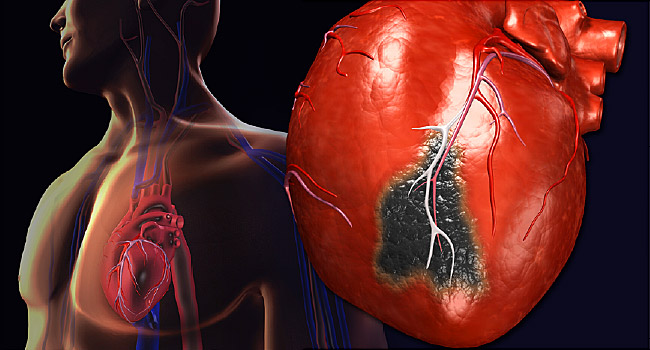
Heart disease describes a range of conditions that affect your heart. Diseases under the heart disease umbrella include blood vessel diseases, such as coronary artery disease; heart rhythm problems (arrhythmias); and heart defects you’re born with (congenital heart defects), among others.
The term “heart disease” is often used interchangeably with the term “cardiovascular disease.” Cardiovascular disease generally refers to conditions that involve narrowed or blocked blood vessels that can lead to a heart attack, chest pain (angina) or stroke. Other heart conditions, such as those that affect your heart’s muscle, valves or rhythm, also are considered forms of heart disease.
Symptoms
Heart disease symptoms depend on what type of heart disease you have.
Symptoms of heart disease in your blood vessels (atherosclerotic disease)
Cardiovascular disease symptoms may be different for men and women. For instance, men are more likely to have chest pain; women are more likely to have other symptoms along with chest discomfort, such as shortness of breath, nausea and extreme fatigue.
Symptoms can include:
- Chest pain, chest tightness, chest pressure and chest discomfort (angina)
- Shortness of breath
- Pain, numbness, weakness or coldness in your legs or arms if the blood vessels in those parts of your body are narrowed
- Pain in the neck, jaw, throat, upper abdomen or back
You might not be diagnosed with cardiovascular disease until you have a heart attack, angina, stroke or heart failure. It’s important to watch for cardiovascular symptoms and discuss concerns with your doctor. Cardiovascular disease can sometimes be found early with regular evaluations.
How the heart works
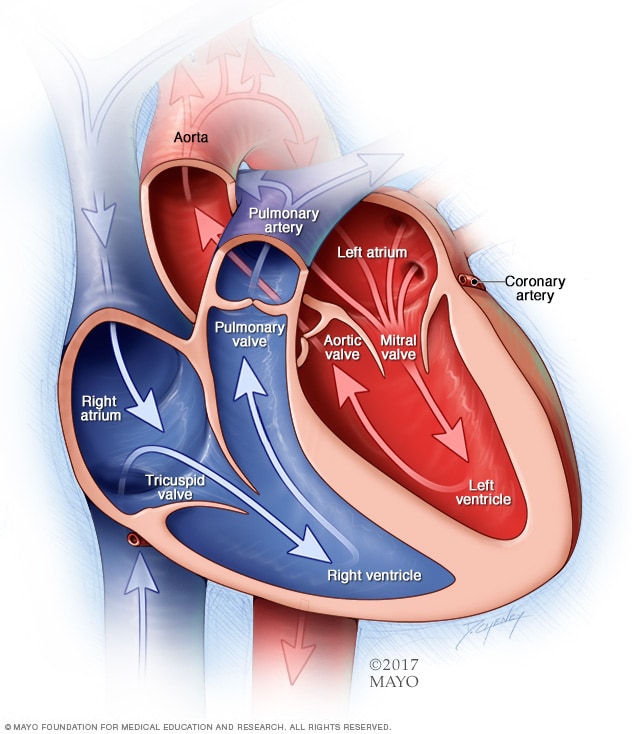
Your heart is a pump. It’s a muscular organ about the size of your fist, situated slightly left of center in your chest. Your heart is divided into the right and the left side. The division prevents oxygen-rich blood from mixing with oxygen-poor blood. Oxygen-poor blood returns to the heart after circulating through your body.
- The right side of the heart, comprising the right atrium and ventricle, collects and pumps blood to the lungs through the pulmonary arteries.
- The lungs refresh the blood with a new supply of oxygen. The lungs also breathe out carbon dioxide, a waste product.
- Oxygen-rich blood then enters the left side of the heart, comprising the left atrium and ventricle.
- The left side of the heart pumps blood through the aorta to supply tissues throughout the body with oxygen and nutrients.

 Bullying